

Contact
Seidenstraße 36
70174 Stuttgart
Deutschland
Office Hours
Nach Vereinbarung
Subject
Basierend auf seiner interdisziplinären kulturwissenschaftlichen Ausbildung liegt sein Forschungsschwerpunkt heute auf der qualitativen Sozialforschung und den Science & Technology Studies (STS), speziell den Akteur-Netzwerk-Theorien sowie Assemblage-Theorien. Seine Forschungsinteressen sind unter anderem automatisiertes Fahren sowie die Stadt als soziotechnische Assemblage. Aktuell forscht er zu soziokulturellen Qualitätskriterien des Städtebaus und den Zielkonflikten urbaner Nachhaltigkeit.
Bornschlegl, S. (2022). Digital Oases in the Analog Desert. Sensing the first materializations of a smart city in Seestadt. Visual vignette presented at the Symposium ‘The Smartification of Everything’ at the University of Ottawa. Retrieved from https://smartificationofeverything.com/artwork/project-one-2snbl-bb6wc
Bornschlegl, S., & Lakits, E. (2022). Potentiale der Negativität. Pride Parades als Infrastrukturen kollektiver Verletzbarkeit. In E. Ernst, S. Schweigler, & G. Vogt (Eds.), Pride. Mediale Prozesse unter dem Regenbogen (pp. 146-156). Wien: Lumen. Retrieved from 10.25365/phaidra.267_11
Bornschlegl, S. (2020). Let us take over! How Jack Stilgoe wants to put the public back into the driving seat of innovation [Book Review: Stilgoe, J. (2020). Who’s Driving Innovation? New Technologies and the Collaborative State. Cham: Palgrave Macmillan.] Retrieved from https://blog.sts.univie.ac.at/2020/09/15/let-us-take-over-how-jack-stilgoe-wants-to-put-the-public-back-into- the-driving-seat-of-innovation/
S. Bornschlegl, S. Auer, & E. Lakits (Eds.). (2019). Kollektiv. Manifestationen des Wir (SYN Vol. 17). Wien: New Academic Press.
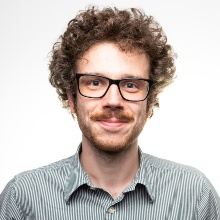
Sebastian Bornschlegl studierte Vergleichende Literaturwissenschaften (BA); Theater-, Film- und Medienwissenschaften (BA) sowie Science-Technology-Society (MA) an der Universität Wien. Während seines Masterstudiums war er als ehrenamtlicher Redakteur und Organisator im Bereich der politischen Bildung tätig. Seit Juli 2022 arbeitet Sebastian Bornschlegl als wissenschaftlicher Mitarbeiter am Stuttgarter Lehrstuhl für Technik- und Umweltsoziologie im Exzellenzcluster „Integrative Computational Design and Construction for Architecture“ (IntCDC), unter anderem für das Projekt „Holistic Quality Model for Extension of Existing Buildings“.